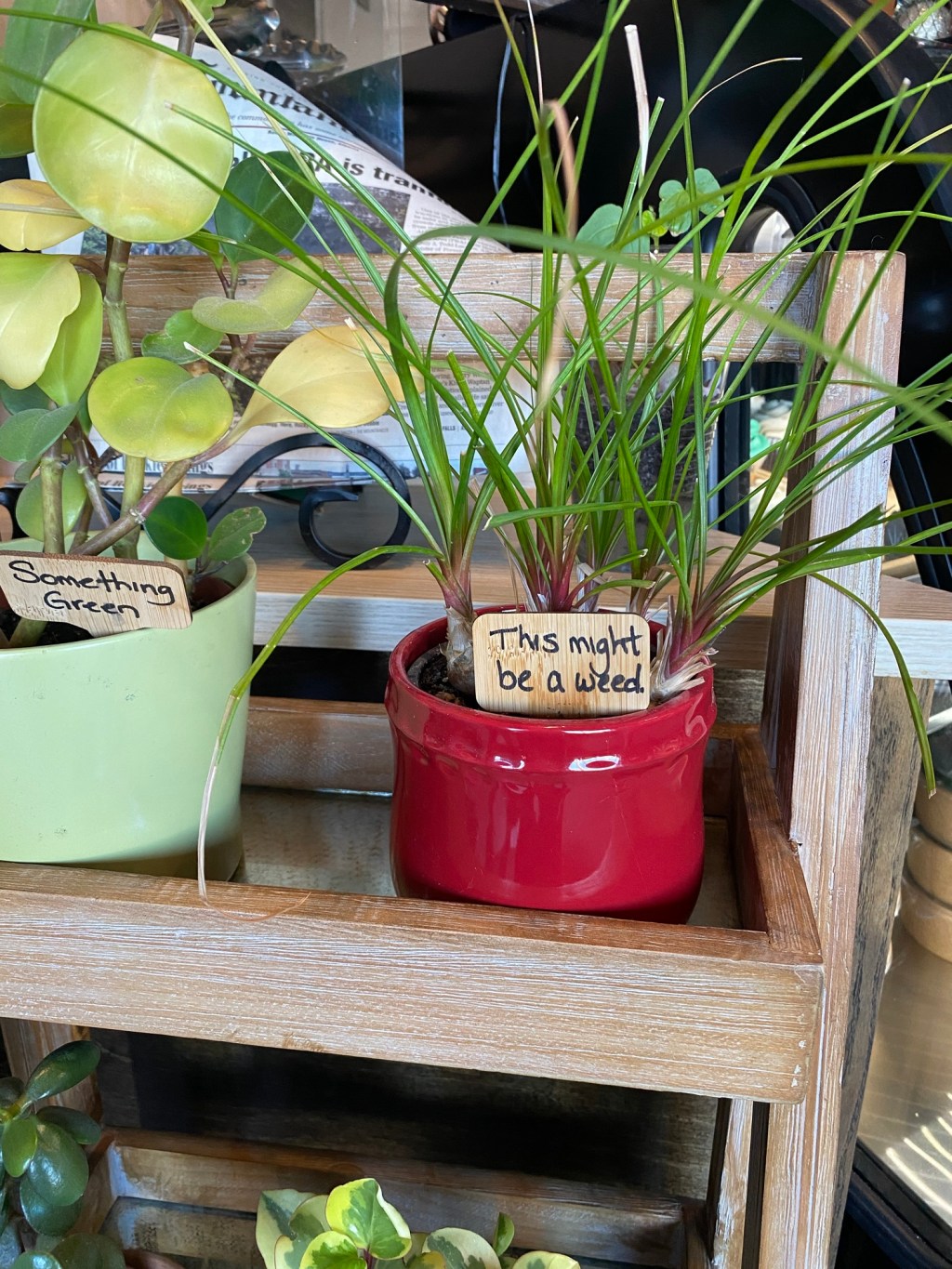
Or, How to Keep the Local Deer Well Fed
When planning a garden to feed the local wildlife, it is essential to consider the following: variety, timing, tools, and most importantly, access. Read on, hopeful gardener, for the steps to a most successful gardening catering experience this summer.
First, one must find a way to work the ground. It’s fairly impossible to locate a working rototiller, and there’s no budget for buying one (we are saving money by planting a garden, for heaven’s sake), so ask around until your neighbors and family members are sick to death of it and finally deliver one. The tiller is designed to only function a short while, so be prepared to resume begging for a tractor of some kind.
Once this necessary (though socially taxing) step is complete, it’s on to seeds. Only the best for our dear yard pets, so there’s little use going to the local store or rooting ’round in cupboards for previous years’ seeds – a hard “No”. One must take the trip to a *reputable greenhouse and hand $elect $pecial $eeds (keyboard keeps doing that, shall get it looked at) of only the finest pedigree. Pick up some flowers and hanging baskets while you’re there. So far, you’ve saved approximately $-93.
Next, you will need to hunt for tools here and there – gardening gloves, a spade, a rake, leftover wooden stakes, perhaps a hammer, some string if you’re fussy. They will be in the garage, also in the house, maybe in a box, or the shed, likely all of the above. Assembling tools should take not more than one full morning. Be sure no one is around, because sometimes their ears become blistered, or they leave quickly. It’s hard to say why.
Time for the pièce de résistance! Planting. With your high-pedigree seeds in hand, and a garden rake in the other, start on one side and drag the rake in a straight line. No, I said a straight line. What about the term “straight” is giving so much trouble? Try again. Perfect, evenly spaced rows will say – like nothing else – you are a Gardener. Vegetables have been known to refuse growing if the line does not resemble a carpenter’s chalk, so if you need to break out the string at this point, go ahead. There’s no shame. The yard pets will likely tramp delicately through the rows, definitely not stepping on anything whilst they partake, and we want to give them every advantage.
Now about variety. Be sure to provide a sumptuous plate by making sure there are beans, carrots, peas, potatoes, beets, lettuces, Swiss chard, and at least a few kinds of herbs and onions. They like to be beside their friends, remember. Beans should be close to beets, but far away from their enemy, onions. Potatoes should be close to the raspberries yet away from the Brussels sprouts. There’s truly nothing like a safe and harmonious vegetable neighborhood to attract and keep animals hopping over, under, or even through the fence.
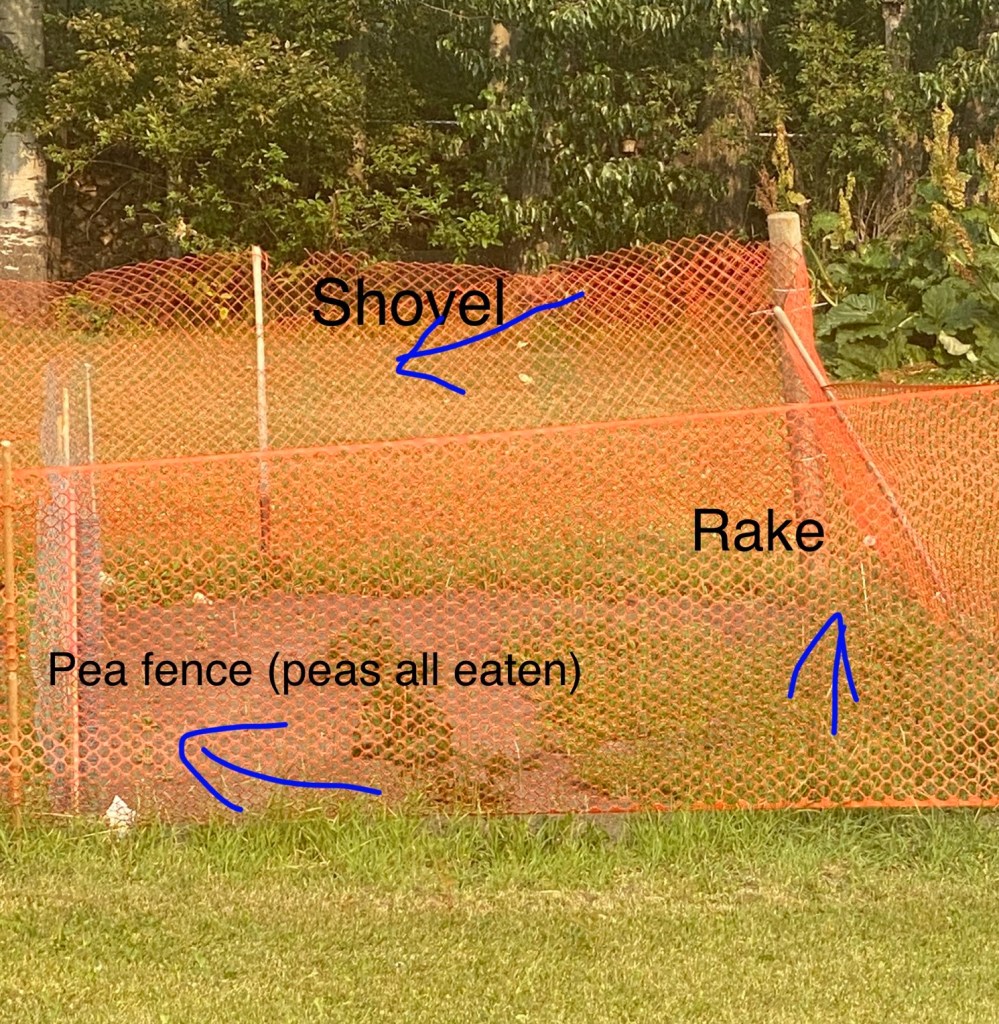
At this point, wiping the sweat and adding a streak of dirt to your brow, you realize all these luscious treats will be too good to be true for our animal friends. Too much, too soon. Create a barrier to slow them down a notch by painstakingly weaving a fence of chicken wire, landscape paper, or snow fence while you decide if an 8-foot chainlink will forever reallocate parts of the lawn. Electric fence is doable, but I have heard stories. If your creation falls down, place garden tools strategically through the sides so that said implements are not only handy, but helpful. Your fence may look like madness, but there’s method in it!
Here we can see helpful arrows showing elegantly placed tools for propping. Unfortunate saggage on the South end. Pea fence made from scratch, each tall tendril carefully placed for maximum accessibility.
And now, to wait. At first nothing happens. The yard creatures are mysteriously absent. A few weeds begin to show. Then, lo, a line of onions, a smattering of lettuce, a beautiful sweep of radishes! Potatoes! It’s a joy to hoe this wonderful dirt, rip out the offending weeds, and set the garden free. Hill the potatoes generously, wind the quack grasses around thy hand and pull out the roots. Satisfying! No matter that the heat has reached records not seen in forty years, simply water it morning and evening like a religious rite. Piece of cake. This has knocked about a year off of your life, but think of the dividends! The bountiful harvest, the savings on groceries, the feeling of shelling peas on a porch as the sun gently sets. You’ve done it. The garden grows.
The bank account is waiting for the clink of all the coins you will save, and you decide now is the time to take a holiday. A friend will continue the religious watering rites, and as there has been not one single sign of anything on four legs, antlered or otherwise, all is safe and well. Be sure the fence is closed, the soil watered, the prayers prayed, and have a lovely time.

No matter … when you return and see the pea fence looking sparse and lonely. No matter that the beans have been bit off halfway down. No matter the sweet lettuces pulled out with their wee legs, or the beet tops nibbled down to the ground. No matter the onions chopped to nil, and the shallots clean gone. There are still potatoes! There are still some rangy, tough radishes! Still the weed patch of sown “flowers” and half a row of marigolds that survived the overly ambitious hoe!
Ah, well. You built it, and they have come. For added good measure, spend about 3 hours weeding the now-intermittent rows to ensure the pets can find in the buffet exactly what they are looking for. No need to make things difficult. It’s character you’re wanting to build, after all.
Besides, didn’t everyone warn you of precisely this? It warms the cockles of the heart to think on their words now. All that work and nothing to show.
No, not nothing. You have shed sweat, blood and perhaps a tear for the lost hours of summer, but it grew. Who cares who or what is nourished? Isn’t it about the journey, not the destination? The road, not the arrival? The planting was for you, the harvest is for them?
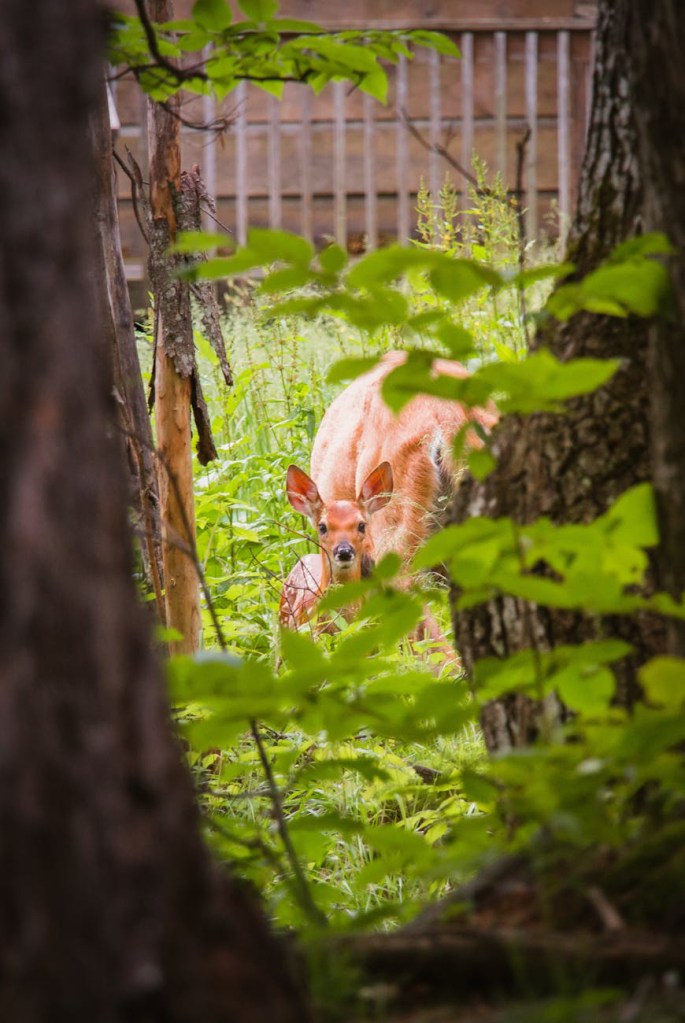
Yard pests pose as beautiful, innocent woodland creatures.
Next year, just stop after step one. Then buy some grass seed.
Rumor has it the innocent yard pets aren’t so innocent, after all.

 Stories for Humans