By now you may be saying to yourself, “This blog is called Stories for Humans. When will she stop dithering about with dry, dusty topics? Get to the stories!”
And so I shall. The thing is, right now as I’m evaluating my life as a half-of-a-hundred year old ancient person, most of the stories I want to write involve me, and it’s hard to write about Me without implicating Other People who may want a say in the portrayal, bad or good, of their part in the story. Irish novelist John Banville recently said, “I’m writing a memoir. It’s a pack of lies”. Perhaps Shakespeare had so much success because he wrote about long dead kings and queens, and no one was alive that knew the real story. Yeah, that’s it, Shakespeare was a coward and a knave, not a brilliant, innovative, prolific mind. As an English teacher, I should probably stop talking now, before I run the entire canon into the ground with my vanity.
One reason teaching was often a struggle is I never quite fit in the school setting; I find the system clumsy and unworkable. This idea that all children would learn the same things, at the same time, in the same way seemed wildly at odds to the way children actually are, which is as varied as summer flowers on a mountainside. We’re not “just another brick in the wall” (Pink Floyd). My own school days swung from feeling resentful and frustrated, to competent and studious; one moment wishing the ground would swallow up my teachers like the sons of Korah, another time being ever so hopeful for their attention and praise.
It’s been said many times that schools work best for neurotypical students, particularly girls, who love to sit quietly, learn and follow the rules. One cardinal rule at the small Christian school I attended was never to turn around in our cubicle desks. We must look forward between the dividers at all times. Turning around would risk distracting others, maybe even talking, seeing what some other kid was up to, and being tempted by sundry evils such as sending paper planes across the room to land unexpectedly in some very serious student’s desk. I was rarely caught “turning around”, but would surreptitiously glance over my shoulder and notice how often an extremely restless and bored child (usually a boy) was practically spinning in his chair, tipping it back and forth, getting demerits and after three of those a detention, and so would have to stay in at lunch or after school in the same chair, facing forward and writing lines like a tortured character in a tale by Edgar Allan Poe. The whole thing struck me as a highly impractical method of discipline and education, and yet I thrived in it.
Sitting in my little cubicle desk working away at goals I had set for myself in my PACES workbooks was simply perfect. I was easily distracted, internally motivated, and highly competitive. Individualized learning worked for me, and the quiet environment, broken only by the soft hum of voices across the room or the tap tap of a teacher’s heels or the furnace thrumming along was just what I needed. In fact, it worked so well that when my friend (the only other student in grade 2) moved away, I decided that I would catch up with all the grade 3’s. Maybe if I was in the same grade as they were I would be accepted and would have more friends. And so I toiled feverishly, completing workbooks at a breakneck pace, and gradually completed an entire extra year of school. I recall the stress of it about finished me. A bit odd though that no one asked, “What on earth are you doing?” Or maybe they did notice and thought it risky to disturb the small, frantic, mad professor. Perhaps I would come unglued!

And so the elementary years passed, and I went from academic strength to strength. I found out quickly that this did not, in fact, endear me to my peers. Quite the opposite. My strongest memories of elementary school were that of being ostracized and downright despised by other kids. I was left out of going to the park, and instead would stay at the front of the school alone, playing on the swings or just pulling at the grass. I don’t think I was terribly sad about it after awhile; it was just the way things were. Eventually I found another friend, but she left for public school the next year and I was alone again.
The reality is that schools are designed to work well for a small fraction of students. Those whose brains are wired to pay attention to verbal and written instruction, who can churn out what the teacher wants, and then get on with what they would rather be doing. These days it’s generally playing a game on their Chromebook or sneaking away somewhere with their phones. Is anyone learning anything, really? Does it matter? Aren’t we all just trying to get through the day? I was in love with teaching. Seeing the light bulb go on, vigorously debating current events, reading that essay they had struggled and labored over, or seeing a poem written in a flash of genius by an otherwise unengaged student. This was a journey filled with magic. This, I could do. Last year, I tried valiantly to wrestle attention away from whatever was on that Chromebook – a chat, a game, a video, but the die had already been cast. In those classes, the joy of teaching disappeared. It was depressing.

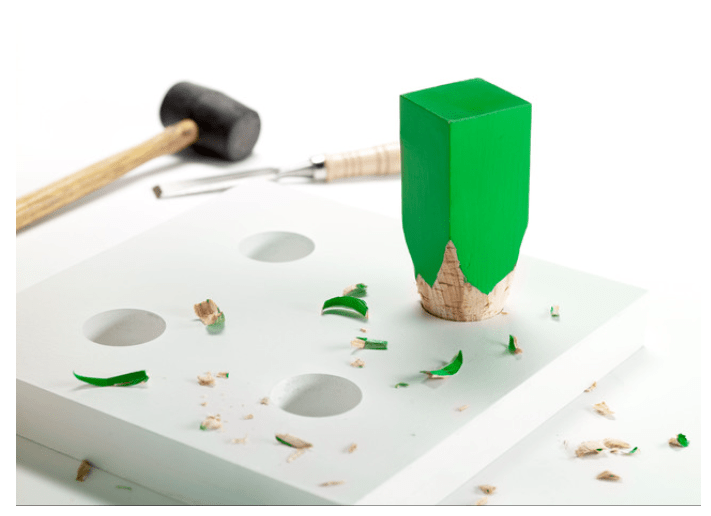
Most schools are like a game designed for round, wooden pegs. Except many pegs are star shaped. Some are square, some rectangular, some oval. A few really break the mold and are shaped like spirals, rhombuses, cubes, or crescent moons. And so the round pegs thrive in their round holes, while the differently-shaped learn to grind their edges down or pretend to be round, and fit in that way. By the end of the game, most of the pegs have figured out how to fit into round holes, losing their distinction, even forgetting what shape they once had been. And often the naturally round pegs grow up to be the referees and umpires for new school games, and so the cycle continues.
School days are a mix of bright and dark, for me, as they are for everyone. I was lucky and landed in a place where I could thrive on doing what was expected, at least most of the time. I learned to write the answer and stop thinking so I could move on to the next page, the next workbook.
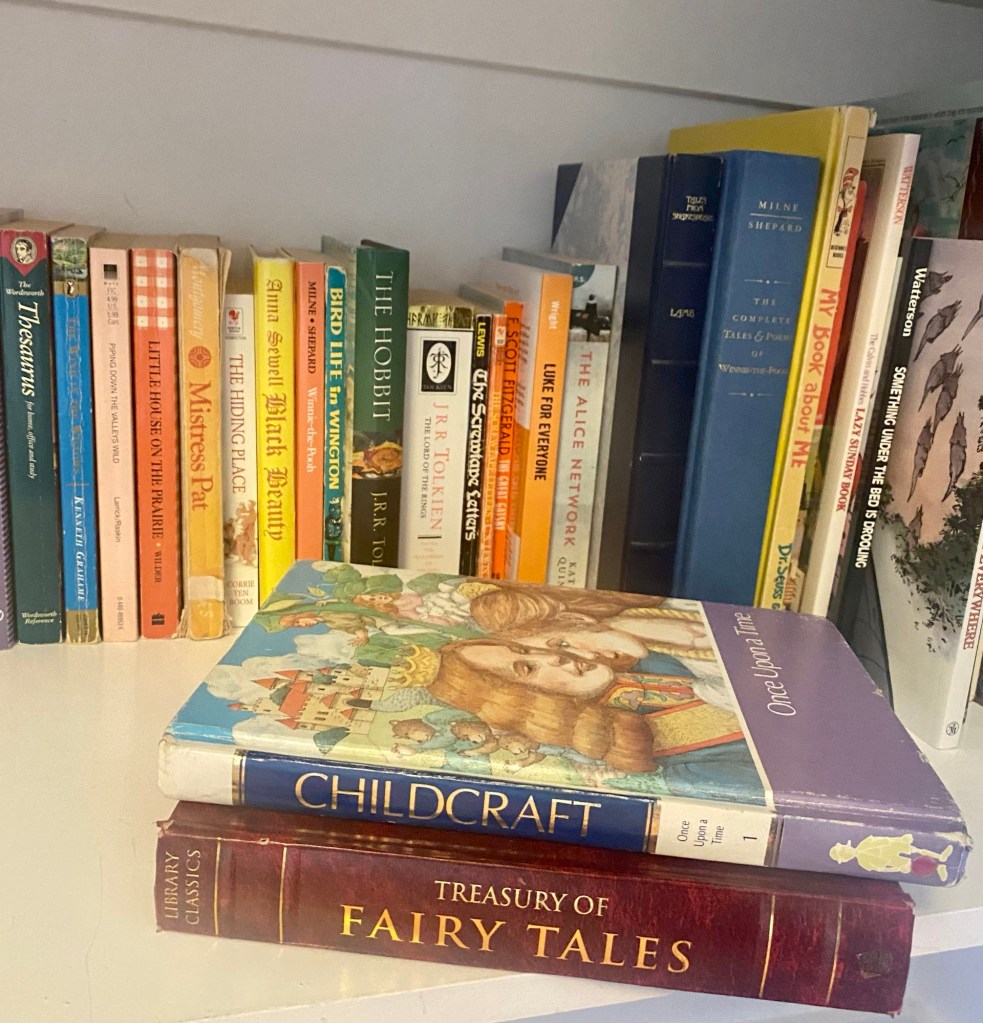
I discovered real learning was in books. There was a whole season where I hid books of all kinds in my little cubicle, reading instead of what I was supposed to be doing, and then would do all my homework later. This was after catching up to the next grade and realizing it had done exactly nothing for me. I read like an addict, one book at a time, until I had exhausted our school library. I then tried to find ways to sneak into the town library, conveniently located across the alley behind the school. A tricky task, as I recall, because the librarians knew I wasn’t supposed to be there and the teachers were fairly wary about me disappearing, and then there was my “zoning out” in the library and forgetting I only had ten minutes, arriving breathless and not at all suspicious back at school a good 20 minutes after recess had ended. Plus, they wouldn’t give me a library card until I was a certain age. The audacity!
We all somehow get through school, but it can leave deep scars because of not fitting in socially or academically to the very narrow slots allowed to us. I’m sure you have stories to tell yourself, reader. Everywhere stories are told, people hold memories of their school years and how other students or teachers affected their life. Which is why I made it my mission to be part of the better stories, where students felt seen, heard, and understood, where I could run into a former student on the street and they would smile, not duck and hide from me. I’m sure there are times I have let students down as well. It’s hard to see everything and harder still to do anything about what needs changing.
Sitting in my little ACE school desk scribbling away at my PACES (workbooks) was comfortable and highly efficient. We even marked our own work at “scoring desks”, with red pens to mark X on wrong answers, then back to our cubicle to fix it, and back up again to check or “rescore”, and so we learned there was nothing so quick and effective as getting the right answer the first time. And it worked. I’m not saying it was awful and terrible, except that if you’re wanting to shape and condition (control?) an entire generation of Christian kids, there’s nothing so effective as training them to do it themselves.
The intent here is to tell my own story, and while some parts may come across as critical, the intent is not to berate anyone, except perhaps the system of education to which we have been acclimatized. I have high regard for my former teachers and the staff at the school who were doing their best with little resources, many volunteering their time, to give us a foundation in values, morality, and biblical literacy. For that I am thankful.
Additionally, the naturally “round peg” students are just as deserving of a thoughtful and robust education as other “shapes”. Often, these diligent students end up carrying the lion’s share, doing the majority of work for group projects, heading up the student council, and helping less motivated friends with homework. My elementary school years were a complex conglomerate of experiences, like most people. On one hand I enjoyed learning and completing my assignments, and on the other I was bored, disillusioned, and frustrated by watching some fellow students struggle and get left behind.
Society needs to wrestle honestly with the wide holes in the education system and not pretend that students aren’t falling through every minute. In many cases more damage is done in the classroom than learning occurs. The girl who fakes a smile and pretends to enjoy the lesson and understand what is being taught is just as much at risk as the boy twirling pencils in his desk and darting out to run in the hallway at the slightest opportunity. In fact, often it is the boy who gets an ADHD diagnosis and support through medication, an education plan, even an assistant, while the girl is shamed perhaps for not being organized and having a terribly messy desk, as though she is doing it to provoke the teacher. She gets no supports, and manages to camouflage by succeeding in other ways, like staying quiet and putting up her hand with the correct answer.
But enough with fixing and philosophizing – this is meant to be story time. In brief, I found school a series of confusing hurdles and contradictory hallways that I had to scramble my way over, around and through. It did get tougher to stay positive as the years progressed, and if I ever (rarely) stumble on a photo of myself during those years the struggle is written plainly on my face. And then starting teaching, discovering this strange world where students sat in open desks and talked at will, turned around (horrors!) and even wandered around the room. Realizing there were still issues, such as how on earth can anyone who needs peace and quiet learn in an often loud and sometimes chaotic environment?
Looking back across time, I see how the twists and turns of my school years, homeschooling, high school, university, and twenty-three years in classrooms led me out of the maze to this present other side, where I’m unable to settle for the status quo. I know many teachers remain on the inside, working hard, fighting battles for change, generally exhausted. Compassion and nuance is needed in talking about anything so controversial and personal as education. It effects all of our lives, for our whole life. The weight should be heavy because the stakes are high.
I was shaped by my school days. Mostly what I see through the pages of memory are the faces of other students, teachers, the bus driver. I can still smell and feel a brand new workbook, ready on my desk in the morning. The crinkle of fresh pages, the sound of sharpening my pencil. The sky blue paint on the dividers, left and right, the shiny stars of achievement, the Canada flag in its stand. The feeling of pushing in a tack on the corkboard with my goals for the day written, the promise of recess coming soon. School days were truly the best and worst of times for this little girl, and for all of us growing up.
I don’t know whether you can look at your past and find, woven like the hidden symbols on a treasure map, the path that will point to your final destination.
Jodi Picoult

 Stories for Humans