
“There is nothing to writing. All you do is sit down at a typewriter and bleed.”
― Ernest Hemingway
The behind-the-scenes process of creating is – somewhat famously – painful, arduous and soul-destroying work. Monet used to discard much of his painting. Kafka wrote in his journal: “Another ten days and I have achieved nothing. It doesn’t come off. A page now and then is successful, but I can’t keep it up, the next day I am powerless.” Ray Bradbury, John Steinbeck, Sylvia Plath…just a few of a long line of writers who documented the misery of the climb. Creation is a process fraught with peril and frustration. I sit down to write one day, and it’s like children pushing at the door before recess, all tumbling out in exuberance and colour; the next, it feels like the exhausted, grey-faced schoolmaster leaning against the back of the door, willing the day to be done.
At times so many ideas press against the walls of my brain that I simply lock the door and wait for calm. Other days, each word feels like it had to be wrestled to the top of a rocky hill and pinned there, only to have to descend again and struggle up with the next.
“You can’t wait for inspiration. You have to go after it with a club.”
― Jack London
However, writers and painters and artists and composers are still compelled somehow, to create. Today (and every day) I’m dogged by the stew that needs to be concocted or the email that needs answering, or the thing that needs cleaning or the text that needs replying. It’s the stew, today. I keep checking the clock and realizing that I must begin chopping vegetables, and then not doing that.
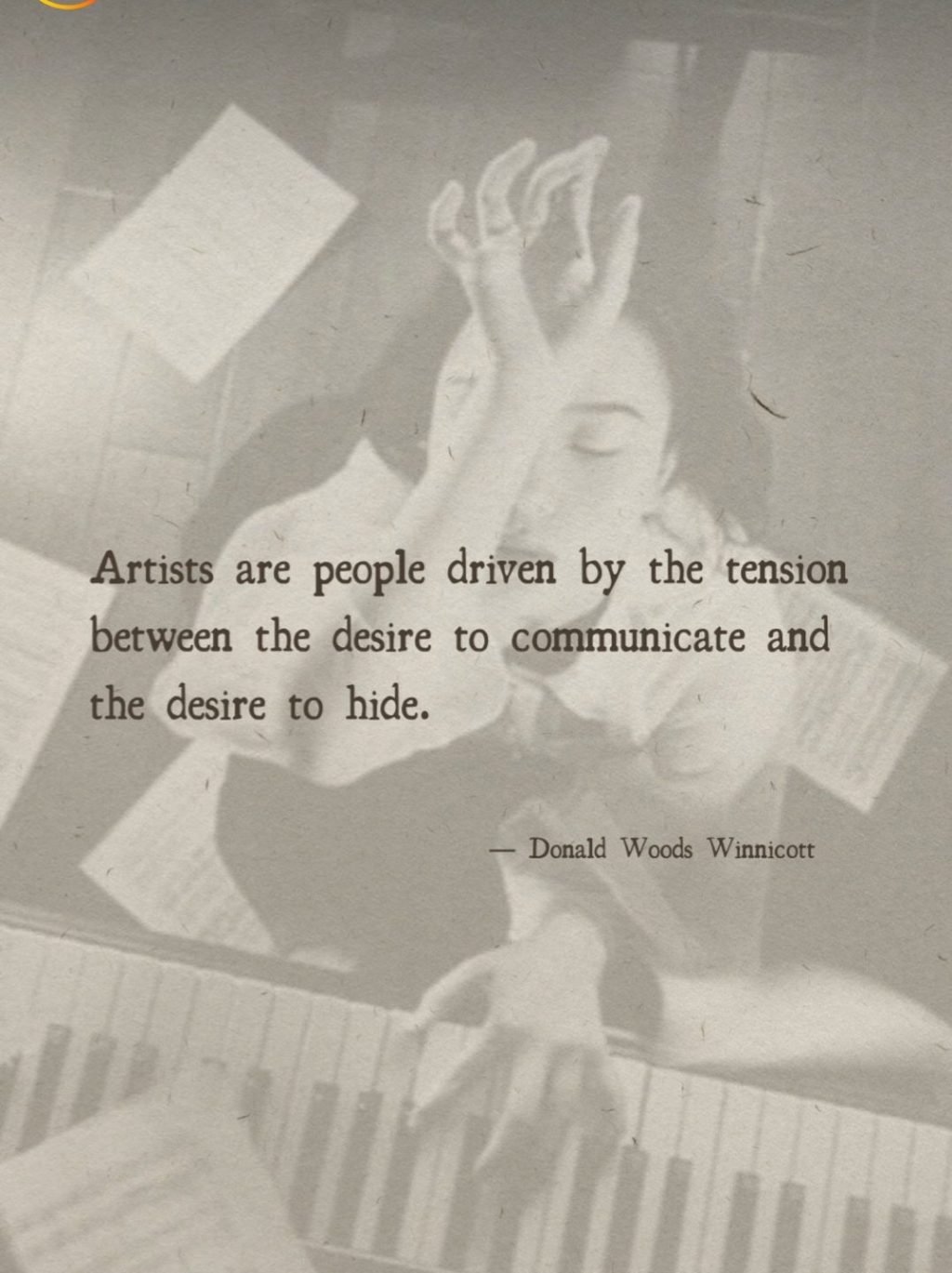
An interesting discomfort of the creative process is found in the quote I used as the heading of this post:
“Artists are people driven by the tension between the desire to communicate and the desire to hide.” – Donald Woods Winnicott
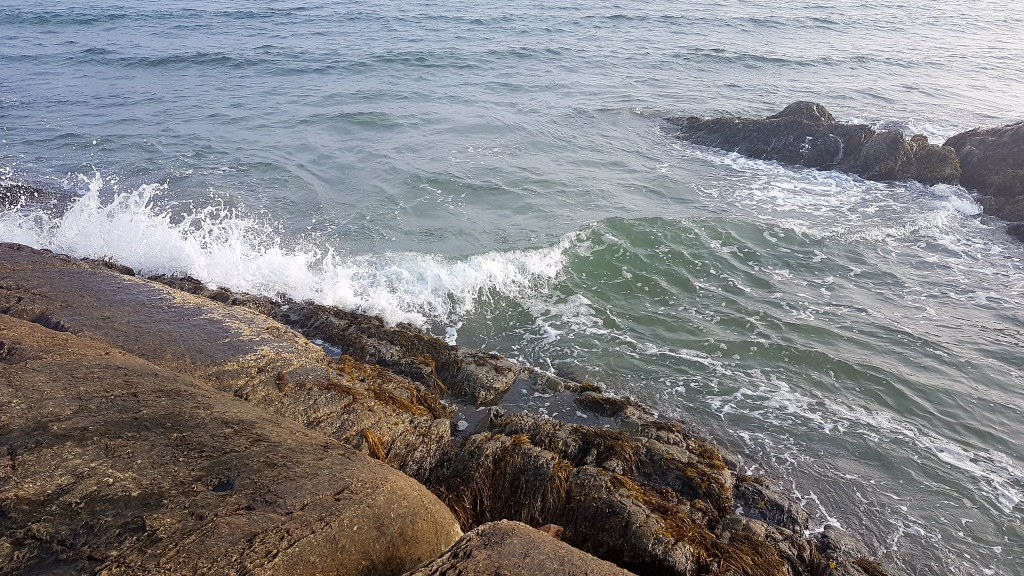
To never have to speak, to explain, to stay quietly under the covering branches, to remain unseen. This is the dream. Waking brings a desire to tell the story, to carve the truth into stone, to fling the colours wide and long. And so reality clashes endlessly with myth. The inner world and outer worlds collide, spraying and churning as surf against cliff, impossible to contain. We want to be heard; we long to be quiet. The creator must learn to let the tides of opinion about their work ebb and flow, growing the wisdom needed to take it in stride and even learn and change through the critical eye of a friend, or a foe.
Once in a while I watch home design videos for fun, and designers often mention the tension of clean lines next to ornate details, of contrast in colour or texture that creates interesting juxtaposition. The struggle, so to speak, of a modern ivory silk curtain next to an antique rugged wooden desk, resulting in a uniquely beautiful vignette. We think of tension as a bad thing, but often it is an opportunity to see what comes of the friction, or to let something go and exist in the ensuing freedom.
“Instead of worrying about what you cannot control, shift your energy to what you can create.”
— Roy T Bennett
The advice most often given by seasoned poets, authors, painters and artists is no matter what, just don’t quit.
There’s a time to wait for inspiration, to let the fallow ground rest. And so not quitting can look different, depending on whether the creator needs space to think or to “touch grass” as they say, and get out into the world to soak in the noise, colour, silence or beauty waiting there. Often a long walk is the best medicine. Continuing to write, even if it’s nonsense, seems to work for some. For others (me), looking at a paragraph of tripe ushers clouds of discouragement.
I know what the problem is – I’m not quite ready to say the most true things, and so I’m searching for a place-holder that still resonates. It’s like when you’re really angry at some injustice, but instead of launching out against it, you kick the cupboard door or comment on how depressing the weather is. I must bring that heavy chest of drawers into the house, but I can’t lift it – so I’ll carry these boxes of small things in instead.
“We have to continually be jumping off cliffs and developing our wings on the way down.”
— Kurt Vonnegut Jr.

“Art washes away from the soul the dust of everyday life.” – Pablo Picasso
The tourist observing that incredible work of art hanging in the gallery comments on the hefty price. “So much! How can it be worth this?” What the tourist is not able to observe are the hours, perhaps weeks and months of struggle. Changing the outline several times, painstakingly erasing the fine lines. Spilled paint. An unfortunate smear, carefully repaired. Self-doubt. Covering it up for maybe a year before trying again. Agonies over the shade of blue for that mountain, or is the white too strong on this branch? Is the shadow too amethyst, shall it be slightly more grey? Finally, signing the name, partly proud, mostly weary. Bereft now of inspiration, the artist makes the rounds to try and sell. The price doubles for the vendor. Is this what art is reduced to, just dollars and cents? a transfer of cash from one place in the cloud to another? But beauty remains. The struggle is worth it. Something is there that wasn’t before, hanging for perhaps generations in a hallway, a living room, observed by children and cousins and visitors, touching the eye and igniting the vision of all who stand before this art, on and on into the vastness of the future. It gathers worth with time. The struggle is worth it.
“Color is my day-long obsession, joy and torment.” – Claude Monet
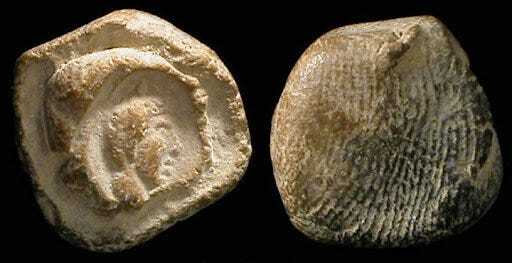
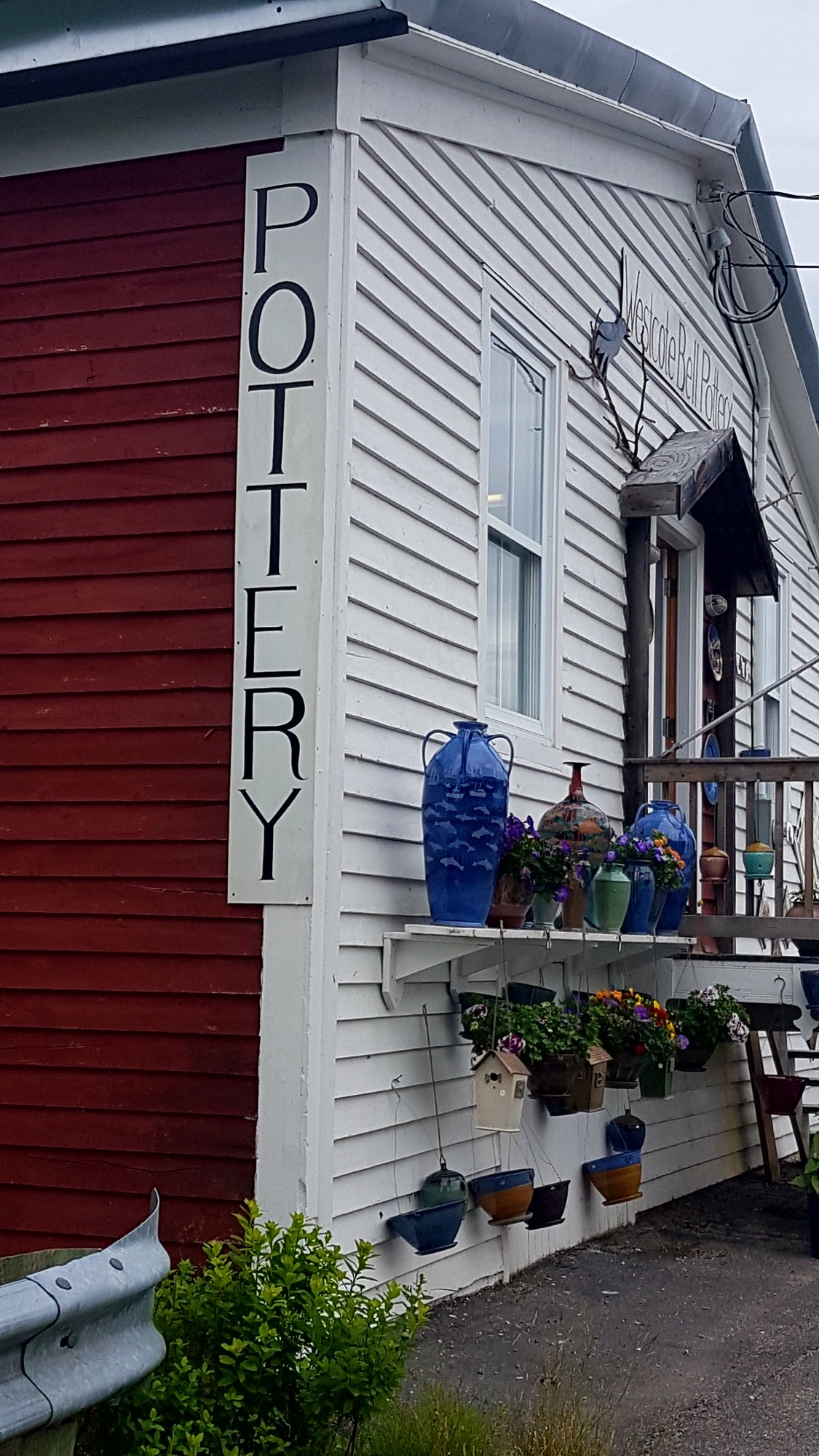
And so behind the scenes the process continues. In the mind, through the heart, into the pen, onto the page. Behind the wall, the creator spins golden thread from straw. Perhaps this is why I love drinking from mugs that were once spun on a potter’s wheel, a lump of grey clay worked and molded, finished and fired, colored and glazed, fired again and cooled. And finally, bought by a friend and carefully packaged, or noticed on a window ledge in a gallery, pristine and perfect and ready for use. Each time I hold a smooth coffee mug I think of the process of creating it, and the person whose hands brought it to life. The fingerprints of potters and craftspeople from ancient times are still found on artifacts that are thousands of years old.
5000 Year Old Fingerprint in Scotland
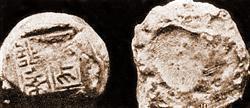
Below, Babylonian (top) and Chinese (bottom) clay seals. A clay mug full of steaming black coffee in a favourite cafe.

Personally, I like it when things fall into place easily. I mean, Rome may not have been built in a day, but surely I can write a simple blog post in a few hours. Once in a while, yes. Though even when – or especially when – words flow freely, it is because the thoughts have been slowly forming, coming together, taking shape behind the door. Are you working on something, way back in your mind? Or, is it sitting on a workbench, spread out on a kitchen table, waiting for you in Microsoft Word? Draped over the back of a chair in the spare room? Keep making it. Even if today it’s just one stitch. The creation is worth the struggle, so pick it up, take a deep breath, and carry on.

 Stories for Humans