
Preamble
Here in Alberta, Canada, we are experiencing a strike by teachers. Students have been out of class now for a few weeks, and there isn’t a firm end in sight. As a former classroom teacher I should care about it more than I do, but I already feel so removed from the daily grind. As a private Christian school teacher it would not have affected me; Christian schools who haven’t caved to become Alternate schools under the jurisdiction of the school division, and thus the ATA (union), are able to keep going. The teachers there know they will be consistently over-worked and underpaid, have made peace with it, and everyone is generally doing their best with what they have.
Weighing In
The enormous class sizes in many schools, the student behavior, the toxic politics, lack of funds, the complete lack of respect from just about everyone – I get it, I really do. Some teachers have been able to create a little cocoon for themselves where things go like clockwork, and if they need a day off they take it. These teachers have learned to survive and, often by chance, end up with a lighter load, more prep times, a smaller class, or just do what they can and leave the rest.
Most teachers aren’t in that sweet spot. They feel trapped, exhausted emotionally from not being able to help students that need it, just barely managing second by second to deal with the demands, the constant needs, changes by administration, and totally unrealistic expectations. One heavy demand that has changed over the last years is expecting teachers to create the program plans for students with diverse needs. Sometimes there are several in one classroom, and the plans can be very complex, requiring deep study and understanding, further research, and meetings with psychologists, parents, and other teams such as OT and Speech specialists. In my opinion, these plans (and thus the students) are not receiving the attention they deserve. There is simply nothing left at the end of a 9 or 10 hour day with barely a break to use the washroom, and the two brain cells we have left struggle mightily to create something that needs careful language, sensitive nuance, and full understanding of children’s mental and psychological needs.
So What Do I Suggest?
So glad you asked! What I have seen modeled and work well is schools hiring a Special Education teacher who prepares and oversees all of the program plans, meeting with teachers, principals, parents and specialists to explain, get input, answer questions, and do follow up work. This model takes an enormous load off of already over-worked teachers. It also means there is consistency in communication, better accountability, and fewer children fall through the cracks. Less funding would need to go to specialists who drop in now and then, but realistically have little idea what students need, because they simply do not know the students – they don’t interact with them every day.
My Actual Point
Preamble aside, what I really came to talk about is what I have observed as a music lesson teacher in the students who sit at my piano.
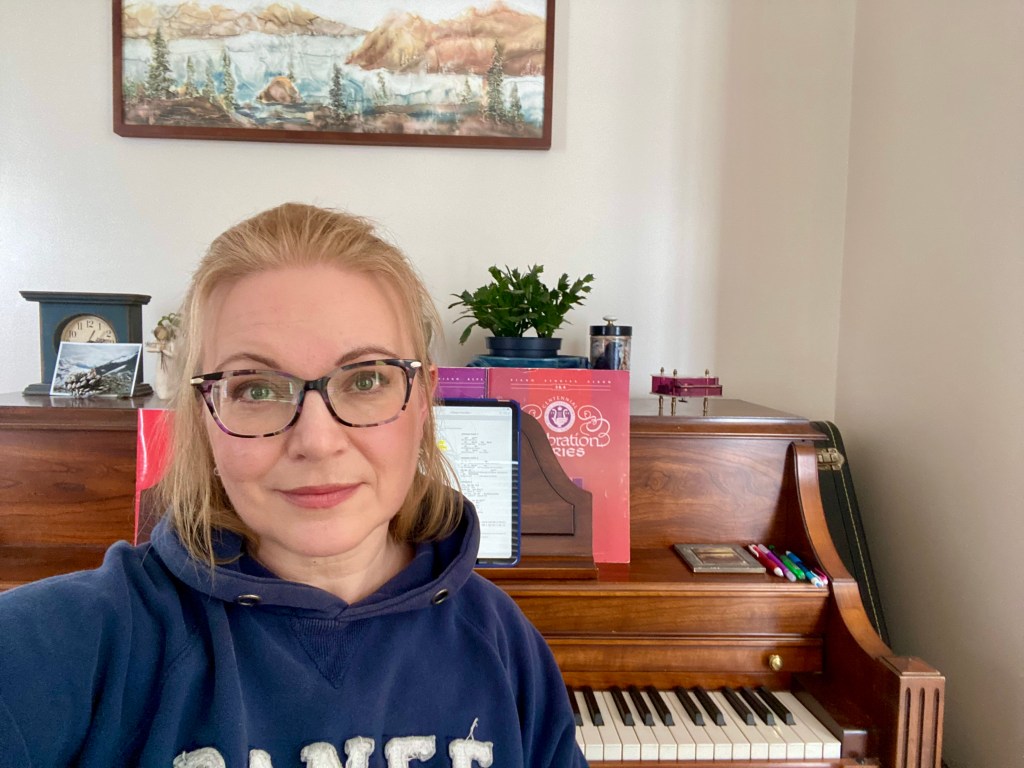
There has been a big difference in the last two weeks of lessons. Some kids come in with a bounce in their step, far more animated and energetic than usual. They look “put together”, like they haven’t been dragged around a school and playground for hours before finding themselves at my door, hungry, thirsty, with just enough stamina to get through the lesson.
Some kids seem lethargic, sitting down slowly like it’s the electric chair. They are distracted and tired, not used to this schedule-less life. Perhaps they were wrested from a Netflix marathon, or brought from strange hours of being babysat while mom and dad were at work.
Parents are equally discombobulated; having finally figured out the year’s schedule, now starting from scratch — tired from answering questions, getting snacks, or working all day with kids in tow. School seems like heaven…when will they go back to SCHOOL!!
Everyone has been thrown into a more chaotic life. Regardless of whose “side” we are on – teachers, parents, politicians, kids, or some conglomeration of those – compassion and understanding are as essential as oxygen. This is just hard, because change is always hard.
My Point, Then?
School makes a big difference for each child, each teenager.
Some thrive in highly structured, social environments. The bells, subjects, sounds, line-ups and playground scuffles give them life! School is interesting and exciting, and so no matter how tired they are, they are always up for the next thing, whether it be a piano lesson or what-have-you. I appreciate these students, and admire their tenacity. I still try to create a peaceful space for them, and love to listen to their stories as they come in and go out at the end of the half hour. Their energy is contagious.
Some students survive school. You can tell, as they shuffle in pale and distracted, as if they are still hearing the clanging of bells, breaking of pencils, still traumatized by little Johnny getting in trouble again or by someone being bullied on the playground. Maybe they didn’t understand a Math lesson and are sitting with the shame of the teacher staring at them like they crawled out from under a rock. The child has only about 12% of their brain power left for a piano lesson; they are on autopilot, partly dissociated. We do our best. We speak slowly and calmly. We offer stickers and glasses of water.
I Was the Second Kind
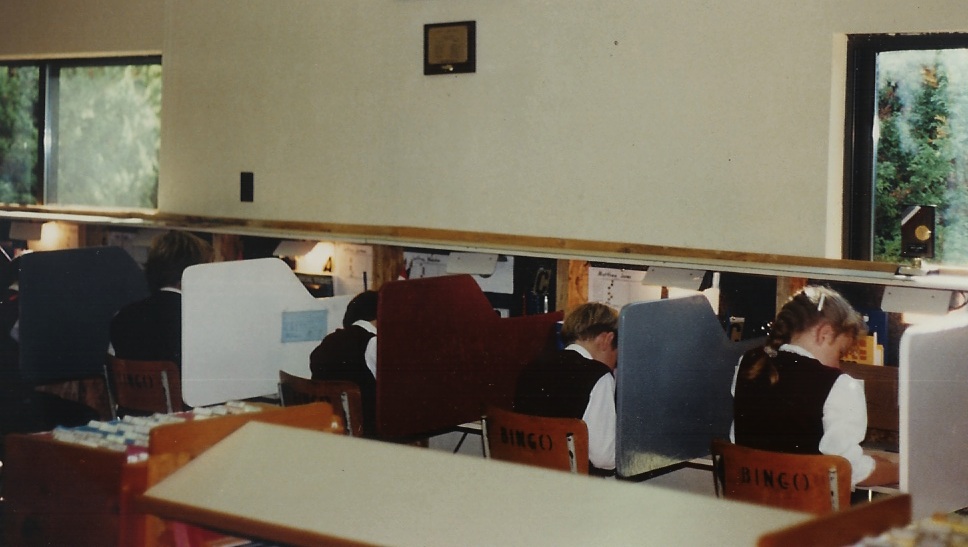
I was one who survived school. Sure, I put on the bravest face I could muster, and there were fun times and good days. I found all the noise overwhelming. And even though we were at little desks that had dividers and faced away from each other (google ACE schools), I knew what was going on across the room, knew that grade 3 boy had been waiting for an hour for a teacher to come, aware that two of the high school girls had been giggling the bathroom for over 20 minutes, or thinking about the two boys who left their lunch on the bus and hadn’t eaten all day. It was too much. My brain was humming, juggling a thousand thoughts, overwhelmed by the clicking of heels, the sharp scent of perfume or coffee, the kid getting a “talking to” in the hallway.
I was motivated by finishing tasks, thankfully, and would force myself to concentrate and achieve the goals on the little black and white chart in front of me. And get a shiny star sticker for the trouble, and be able to leave my workbooks at school. If nothing else, those ACE one-room schools of the 1980’s taught me to set appropriate goals and reach them. A skill almost completely lacking in schools it seems, today. Among other things. I sound like I’m 80 years old.
What It Meant
I think being one of those who survived the school day made me into a certain kind of teacher. I struggled to enforce petty rules and follow tight schedules, often letting students “off the hook” or giving them a second, third, even fourth chance to complete an assignment. Sometimes I was strict, but in a kind way, and mainly to the students who I knew could handle it. High expectations were for for high achieving students who would grow because of the challenge, and not give up in weary defeat. I offered compassion and grace to students who struggled, especially those who felt misunderstood, or who were dealing with deep underlying anxiety. Sometimes, I got it mixed up. I didn’t always notice those who needed an escape, who were holding on by a thread. But I did try, and I think it made a difference.
One of my great heartbreaks in life has been helping, guiding and showing compassion for students while my own kids were misunderstood and harmed by the way they were treated in school. I remember giving a devotional and listening to prayer requests at the front of the room while my soul was crying, wondering always if my own kids were ok, if they had made it to class, if they had remembered their lunch. Even in the early days, when I taught in the same school my children attended, I didn’t know what to do when I saw my son sitting on the floor outside his grade 3 classroom, head hung low after another “dressing down” by his frustrated, Type A teacher. One day, when I have permission, I will tell more about that. I wish I had been braver. I wish I had stood up sooner, as a parent, for my own kids. Parents, go into your schools – find out what is going on. Listen at the door if you need to. Sit in the classroom and observe. You might be the only advocate your child has, and they might need you to see some things. Enough said.
Postlude
What I have observed in my music students over the teacher’s strike made me think. How can we make schools a better place for our kids? Definitely smaller classes would help. How do we expect a teacher to notice our child’s needs when there are 39 other children with their hand up? Or when as soon as the recess bell rings, an administrator is walking in the doorway with another request, or a new student, or to start a meeting we may or may not have forgotten about? But even in a class of fifteen students the din can be deafening, the bathrooms a terror, the hallway a gauntlet to be run. We have a responsibility to create spaces where students grow and enjoy life, not merely survive the day. Schools are so much more than the place to drop kids off so you can get something done, or get to work on time. I have a saying I have repeated many times,
“This is much more than school, it is LIFE for a child.”
Many times if you ask an adult about their past life they will think back to what a teacher said, what happened in a locker room, or how they felt on the sports team. Maybe they will recall one good friend, or a kind word, or a project they really enjoyed. But a lot of the memories are sad, lonely, or negative. Some are downright abusive. Whatever we can do to make calm, positive, and compassionate places for our kids to learn, I am all in. For now, I do it one student, one song, one lesson at a time.
How is your child doing, for real? Take it from a parent and a teacher – there will be fewer regrets if you stay and find out. It doesn’t mean blame needs to be assigned, or that anyone is at fault. It might just be that the system is hard on your child’s heart and soul, and it would help to talk it over.

 Stories for Humans