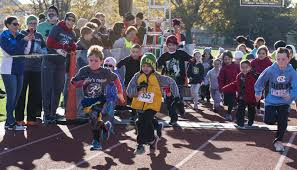
Are you running someone else’s race? Think about it. Why would anyone do that, you might ask?
In my school years I ran a lot of races. Every year at the track meet I would win the sprints, and the long distances, but then one year I was met with a shock. Approaching the last lap in the distance race, there in my peripheral view was another runner steadily passing me! No matter how hard I tried, she kept pulling ahead little by little…and won. Apparently my prowess in running was over at the ripe age of 14 years. Well, I still had the sprints, but could not seem to win at long distance. It was good for me – the first of many experiences in understanding that I wasn’t always going to be a big fish in a small pond.
All of that to get us thinking about races. Can you imagine the rapid heartbeat, the butterflies, the adrenaline of the starting gun, the effort and muscle, the big push toward that finish line, the stumbling and nausea afterward – and then being told you had run for someone else? That it wasn’t your name on the pinny, that you had essentially wasted all that effort, and someone else would get the credit for your time?
In life it’s not so basic, and yet a similar situation can occur. We can end up running someone else’s race.
There is the real you, and there is the version of you that others see or expect from you. Humans look at other humans “through a glass, darkly”. We often see others through the roles they play, or through what they have to offer us. Our real selves are not merely extensions of other people, however. Our kids, for example, are not just extensions of us – they are their own, individual, separate person.
When we view others only through the lens of who they are to us, rather than see them as fully-formed, unique individuals, we can rob them of living their own authentic lives. They are running their race not for themselves, but perhaps unknowingly, for us. All of that effort is being put in so that we are content, happy, or fulfilled. It’s our name on the roster, and the ribbon gets pinned on our chest.
Instead, we should be cheering people on to run their own race. This takes a lot more emotional maturity than one might think. Being able to whole-heartedly cheer for others means we have taken ourselves out of the picture, taken full responsibility for our own lives, and removed any expectation for how their race might affect us. One of the worst scenes is unfortunately a common one: the mom or dad yelling at their kid or the coach at a game, calling them names or putting them down because they missed a shot or had to sit on the bench. And while we all agree on how horrible this is, perhaps worse is the parent who simply doesn’t go to the games. They refuse to go because they can’t bear the shame if their child does something embarrassing, or fails, and so they simply withdraw. They are absent. The removal of presence speaks even louder. It says, “Because you are an extension of me, and I haven’t dealt with my own shame or emotional baggage, I can’t abide what might happen at this game. The only way I can be there is if you shine, all the time”.

Back to the question. Are you running your own race? Am I?
Choosing the career or life path others told you to choose isn’t running your own race. Sometimes we are confused and don’t know which way to go, and people who love us can provide a sounding board or give guidance to just get started. But the choice is really not theirs to make; we have to step up and take both the initiative and the responsibility.
Living life playing out a certain role isn’t running your own race. Being the perfect Auntie, or Friend, or Daughter, or Grandparent is just reflecting what others want you to be. Living your life this way works for them. You feel good because the praise, the smiles, and the encouragement comes, but it isn’t actually for you. It’s to keep you running your race in their name.
As a self-confessed “people-pleaser”, otherwise known as co-dependent, yes-person, or even doormat, I have had to wrestle more with running my own race as an adult than as a girl in Track and Field. There is always someone new to placate, another role to fill. As a mom, for sure I sacrifice for my kids. I personally think when you choose to become a parent there is a level of commitment and sacrifice that is good and right. Parents who think that their responsibility ends when the child turns 18? Not only laughable, but often selfish and hard-hearted. There is a difference, though, between helping someone else over the finish line and running their race for them, or expecting them to run for you.

There is a fancy word that is sometimes used when uncovering the reason for not running our own race: “enmeshment”. Like the word suggests, enmeshment happens when emotions, problems, space, and personal lives are “meshed” together or intertwined in an unhealthy way. Basically, all of these terms (though helpful in their own way) simply mean that there is a lack of definition between where one person ends and the other begins. Running someone else’s race is ok if you’re essentially the same person.
These are complicated issues because people and relationships are multifaceted and complex. Our lives naturally intersect. We affect one another, we help and support one another, and we influence each other. No one is an island.
I think it’s worth taking a moment to ask, “am I running my own race, or is this for someone else?” Taking the time to think about who we are, what our goals are, and where our boundary lines are being pushed and pulled (because no one knows where they are) is important life work.
I don’t want to get to the finish line and find out I was never in the race. I don’t want to be handed a medal with someone else’s name on it. It’s also not someone else’s job to make sure I’m registered in the race. That is my responsibility.
I don’t always know when to help and when to walk away, or when to listen to advice and when to draw the line. What I do know is that the most loving thing is to cheer on others who are becoming their true self. Encouraging people to take their own path is a sign that we care, and can step back and let them run. Having courage to forge our own way means that when we get to the finish line, it will be our name on the ribbon.
Am I running my own race? Most of the time these days, yes. I’ve had to stop a few times and go back to the starting line. There are many lessons I wish I had learned earlier, but they all have taught me something anyway. It’s better to be proud of how we ran the race than to win and carry regrets over the finish line.


 Stories for Humans